Development of a PCL-PEO double network colorimetric pH sensor using electrospun fibers containing Hibiscus rosa sinensis extract and silver nanoparticles for food monitoring
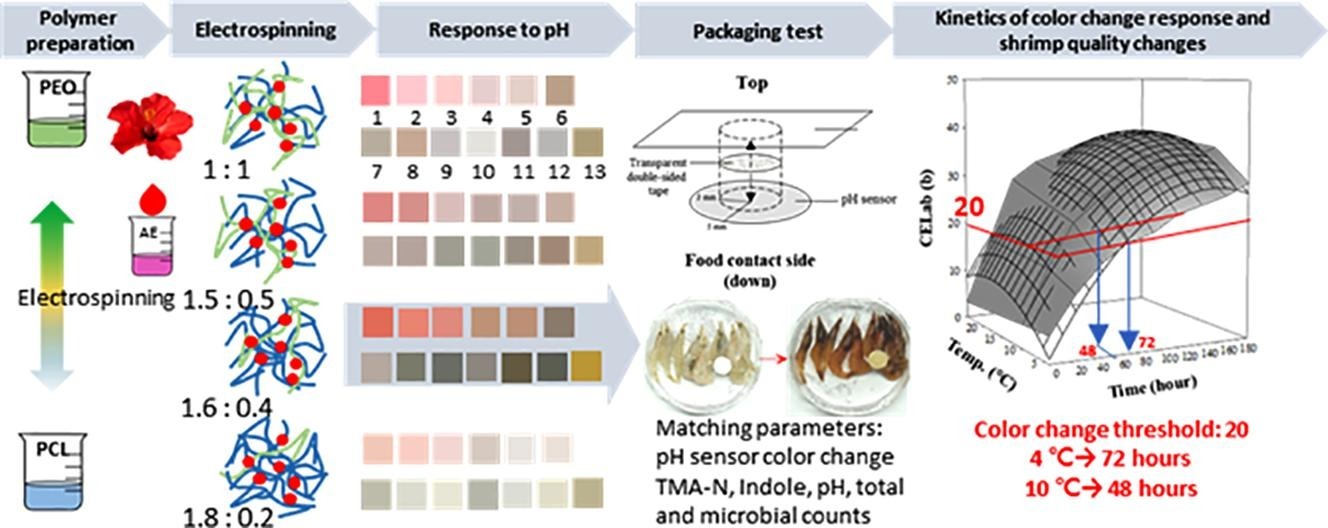
圖文摘要說明
本研究旨在開發一款能監測食品新鮮度的智慧包裝感測器。研究人員利用「靜電紡絲」技術,將取自朱槿花朵的花青素萃取物與高分子材料(PEO及PCL)結合,製成一種對酸鹼值(pH)變化極為敏感的纖維薄膜。在實際應用中,這款感測器能有效監測冷藏蝦子的品質,其顏色會隨著蝦子腐敗所釋放的三甲胺(TMA-N)等化學物質而產生明顯、可預測的變化。最終的動力學分析證實,感測器的顏色變化與蝦子的實際腐敗程度高度相關,可作為一個直觀的視覺標籤,幫助消費者輕易判斷食品在不同冷藏條件下的新鮮狀態。
Abstract
Major anthocyanin, cyanidin-3-sophoroside (318.1 mg/mL), and other minor copigments were identified in the ethanol extract of Hibiscus rosa sinensis. The extracts can be coelectrospun with polycaprolactone and polyethylene oxide into fiber mats and were sensitive to pH changes from 1 to 13 with a unique color code (ΔE > 5). The pH sensor was used to monitor shrimp quality under isothermal conditions to obtain the respective activation energy (Ea in kJ/mol) of the sensors’ color-change response (20.2), measured pH (20.6), and trimethylamine nitrogen (24.6), indole (27.1), and total microbial counts (30.8). Together with the Pearson correlation coefficient, the results showed high correlations between the sensors’ color change and other quality parameters (p < 0.001). The regression equation developed by conducting the kinetic analysis was also suitable for predicting shrimp quality at refrigeration temperatures (4–10 °C) and can be used as a marker to monitor shrimp quality by visually inspecting the item condition.
Keywords:Anthocyanin;Hibiscus rosa sinensis;Electrospinning;pH sensor;Quality monitoring;Kinetic modeling;Refrigerated fresh foods;Food packaging
瀏覽數: